Rotten Wood Alert: How to Inspect Your Deck for Costly Water Damage
Your deck is the ultimate spot for summer barbecues, family gatherings, and relaxing outdoors. However, because it is constantly exposed to the elements, it is highly vulnerable to moisture. Over time, trapped water leads to wood rot—a silent structurally damaging issue that can turn a beautiful outdoor space into a major safety hazard.
Catching wood rot early can mean the difference between a simple, budget-friendly repair and a complete, costly deck replacement. Here is how to inspect your deck like a professional, spot the warning signs, and know when it is time to call in the experts.
The 3 Crucial Areas to Inspect for Wood Rot
Wood rot thrives anywhere moisture gets trapped and cannot dry out. Grab a flashlight and a flathead screwdriver or pocketknife, and check these three critical zones:
The Ledger Board
The ledger board is the heavy piece of lumber that attaches your deck directly to your house. If the metal flashing above it is damaged or missing, rainwater will seep behind it. Check the wood where the deck meets your home's siding. If this area rots, the entire deck can pull away from the house and collapse.
Post Bases and Joists
Look underneath your deck. Check the vertical posts where they touch the concrete footings or the dirt. Soil and debris trap moisture against the wood. Next, look up at the horizontal joists supporting the deck boards. Pay close attention to the tops of the joists where dirt and leaves gather between the deck cracks.
Stair Treads and Railings
Stairs and railings are high-touch areas where water frequently pools. Check the bottom of the stair strings (the wood pieces running diagonally along the steps) and the underside of the handrails.
How to Perform the "Screwdriver Test"
You cannot always spot wood rot just by looking at it; wood often rots from the inside out while the exterior paint or stain looks perfectly fine.
The Test: Take your screwdriver and firmly press the tip into any dark, discolored, or swollen spots on the wood.
The Result: If the wood feels completely solid and the screwdriver bounces off, your deck is structurally sound. If the screwdriver sinks easily into the wood like butter, or if the wood crumbles, flakes, or feels spongy, you have active wood rot.
Repair vs. Replacement: Which One Do You Need?
Finding wood rot does not automatically mean you need to tear down your entire deck. Here is how to determine the best course of action:
When a Repair Works
If the rot is limited to a few individual top deck boards, a couple of stair treads, or a section of the railing, you can easily opt for a localized repair. The rotten boards can be cut out and replaced with fresh, treated lumber, saving you thousands of dollars.
When You Need a Total Deck Replacement
If the rot has spread to the structural skeleton of the deck—such as the main support posts, the ledger board, or more than 30% of the joists—the deck is no longer safe to use. In this scenario, a complete deck replacement is necessary to protect your family and guests.
Not sure if you can afford a new deck? Try our approximate cost desk calculator. Just input the dimensions and type of wood. The calculator will give you a rough estimate so that you can properly budget.
How to Prevent Wood Rot from Coming Back
Once your deck is repaired or rebuilt, you must protect it from future water damage. The two most effective preventative measures are:
Annual Pressure Washing: Mold, mildew, and algae trap moisture against the wood fibers, accelerating rot. Professionally pressure washing your deck once a year removes this harmful organic buildup.
Regular Sealing: Wood needs a protective barrier. Apply a high-quality water-resistant stain or sealant every 2 to 3 years to keep moisture from penetrating the lumber.
Let Us Inspect and Protect Your Deck
Don't wait for a loose railing or a sagging step to turn into an emergency. Whether you need a few rotten boards replaced, a complete structural deck rebuild, or a professional pressure wash to protect your investment, we are here to help.
Contact us today to schedule your professional property inspection and get a free quote!
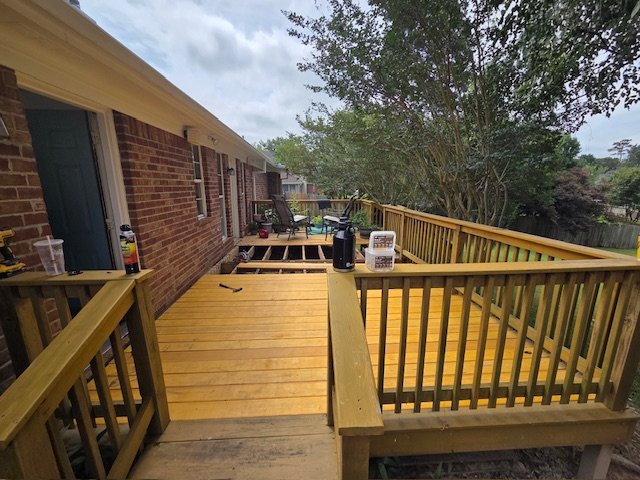
Current Deck Project - Rotten wood removal and board replacement.
